Mobility & Infrastructure.
Move Faster. Build Smarter.
Predict, plan, and optimise mobility and infrastructure systems before the real world feels the impact.
91% of the world's global infrastructure projects fail to be delivered.
Modelling & Simulation can change that.
With Advanced Modelling & Simulation, governments and developers can plan resilient, efficient transport and infrastructure networks through massive-scale simulation of people, vehicles, assets and infrastructure.
Population Demographic Analysis
Transport Disturbance Analysis
Services & Reachability Insights
Population Demographic Analysis
Transport Disturbance Analysis
Services & Reachability Insights
Congestion Policy Optimisation
Intersection Optimisation
Vehicle Parking Capacity and Utilisation
Evacuation Planning
Congestion Policy Optimisation
Intersection Optimisation
Vehicle Parking Capacity and Utilisation
Evacuation Planning
Solution Options
From the UK to Indonesia, and many countries in between, we’re helping governments make robust decisions about their major infrastructure projects.
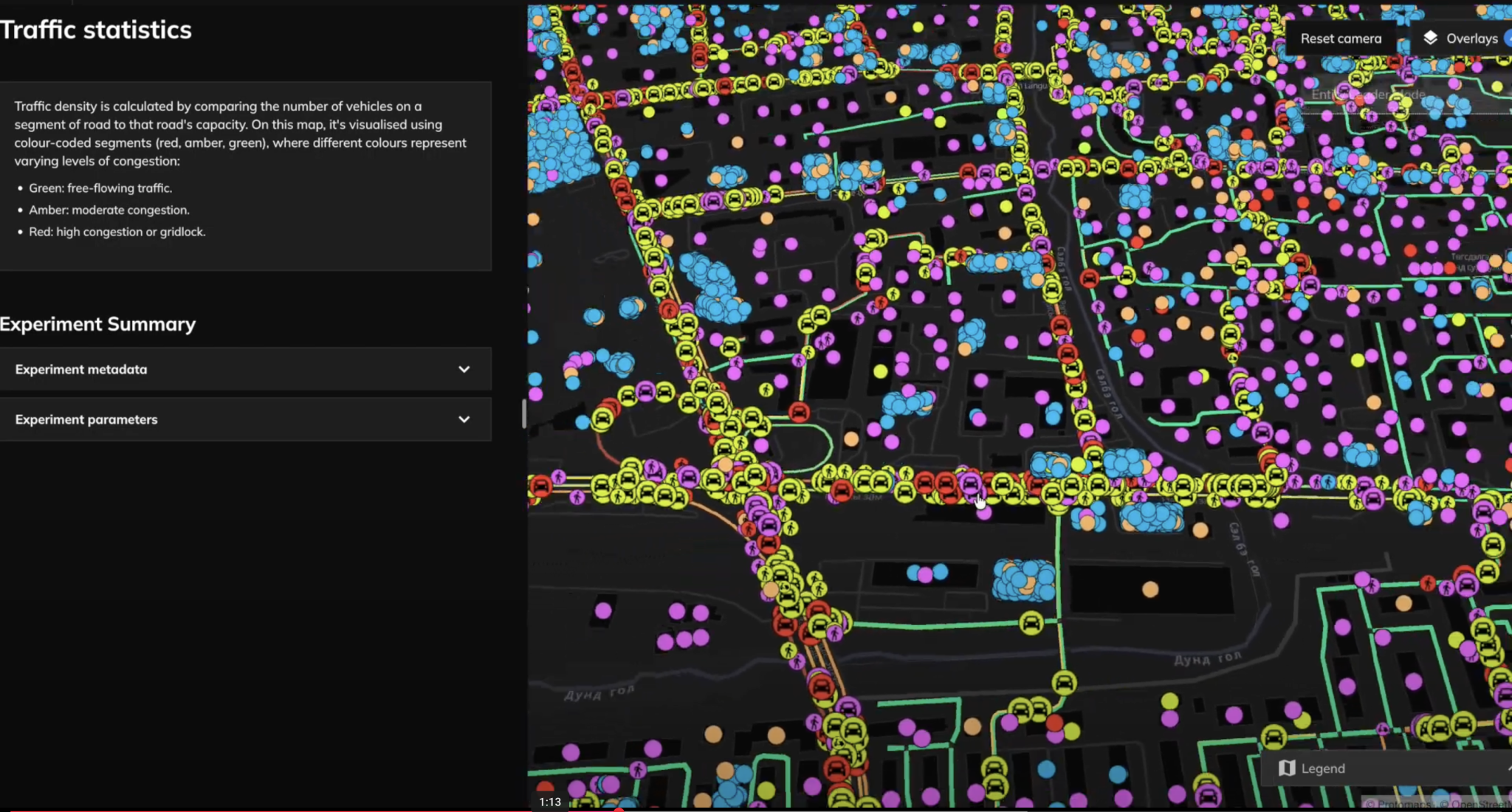
Model real-time traffic patterns down to individual agents, vehicles, and routes.
- Pre-Construction Impact Assessment:
Simulate how a new transport link would alter daily commutes, tourist and commercial traffic patterns, revealing potential new congestion points before a single brick is laid. - Accessibility and Equity Analysis:
Model how a new rail line would change a population’s access to jobs, education, and healthcare, identifying and addressing potential social equity issues. - Economic Impact Forecasting:
Predict the long-term economic benefits by simulating how new infrastructure would influence business site selection, tourism, and real estate values in surrounding areas.
- Integrated Policy Evaluation:Assess how a new transport project interacts with other urban policies, such as new housing developments or low-emission zones, to ensure synergistic outcomes.
- Resilience and Future-Proofing:Stress-test new infrastructure designs against scenarios like population growth or extreme weather events to ensure long-term viability and resilience.
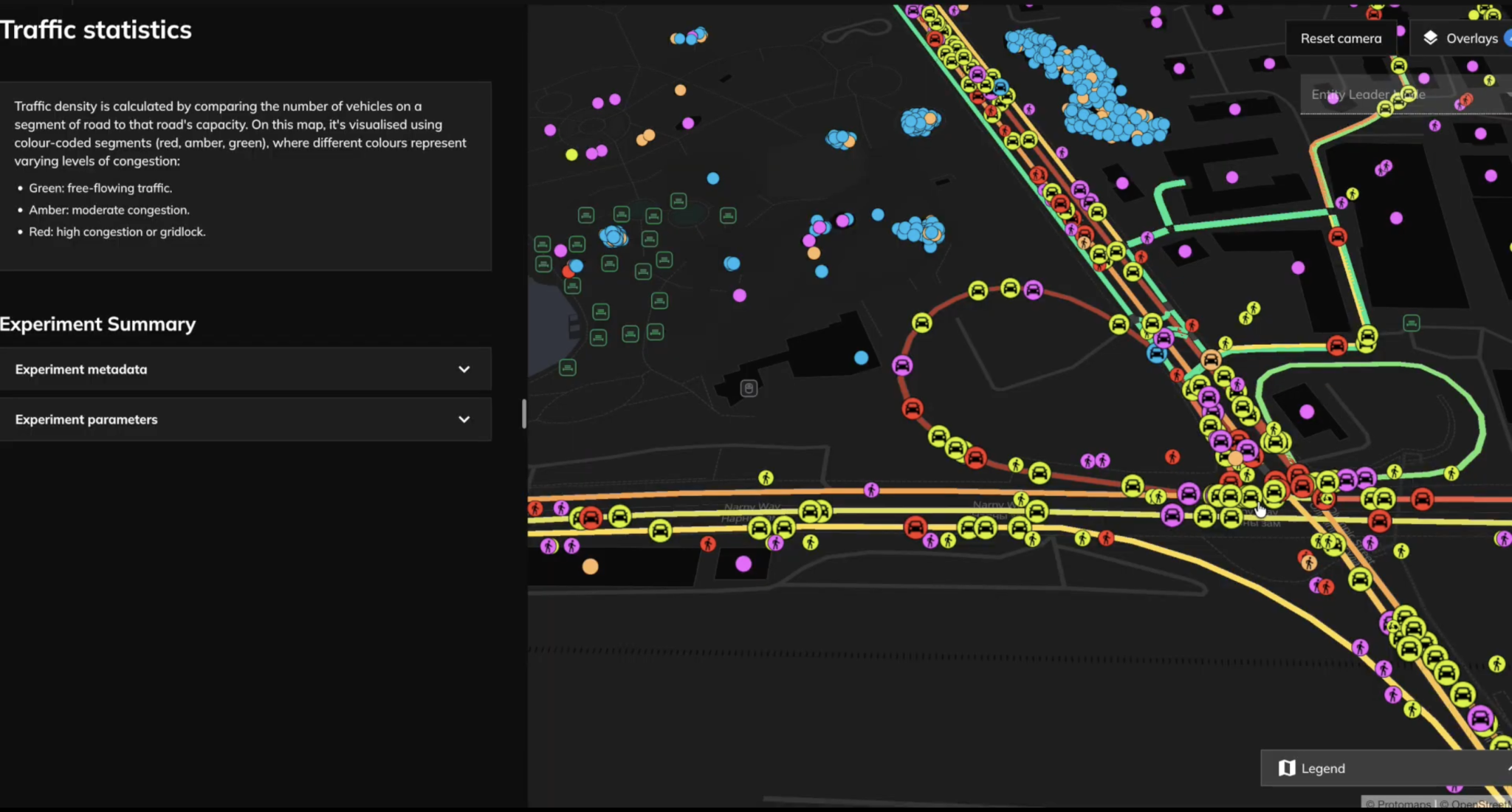
Model individual human behaviours and transportation, at a vast scale derived from academic research and anonymised data sets.
- Influence Peak-Hour Congestion:
Model the impact of incentivising flexible work schedules or staggered school start times to spread out travel demand and reduce traffic during peak hours. - Targeted Infrastructure Investment:
Identify specific traffic bottlenecks at peak hours to justify and prioritise new road or public transit projects. - Air Quality and Pollution Mitigation:
Simulate how shifts in travel behaviour—like promoting cycling or public transit—would reduce vehicle emissions and improve air quality in key urban areas.
- Dynamic Event Management:
Predict and mitigate the impact of major events on traffic flow, allowing for smarter temporary road closures and public transport adjustments. - Emergency Services Planning:
Model how traffic and human movement would be affected during a crisis, helping to pre-plan optimal evacuation and response routes.
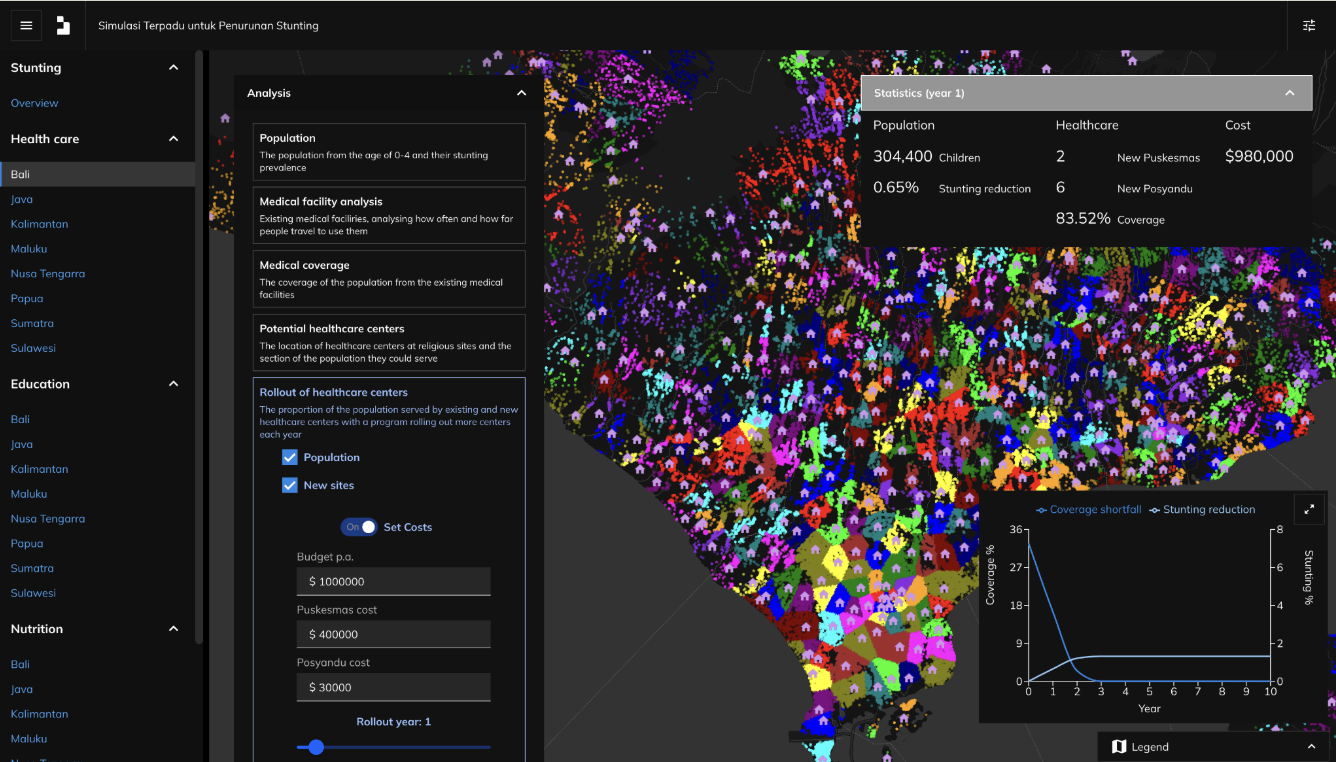
Run flexible experiments and evaluate current and future infrastructure developments.
- Pre-Construction Impact Assessment:
Simulate how a new transport link would alter daily commutes, tourist and commercial traffic patterns, revealing potential new congestion points before a single brick is laid. - Accessibility and Equity Analysis:
Model how a new rail line would change a population’s access to jobs, education, and healthcare, identifying and addressing potential social equity issues. - Economic Impact Forecasting:
Predict the long-term economic benefits by simulating how new infrastructure would influence business site selection, tourism, and real estate values in surrounding areas.
- Integrated Policy Evaluation:
Assess how a new transport project interacts with other urban policies, such as new housing developments or low-emission zones, to ensure synergistic outcomes. - Resilience and Future-Proofing:
Stress-test new infrastructure designs against scenarios like population growth or extreme weather events to ensure long-term viability and resilience.
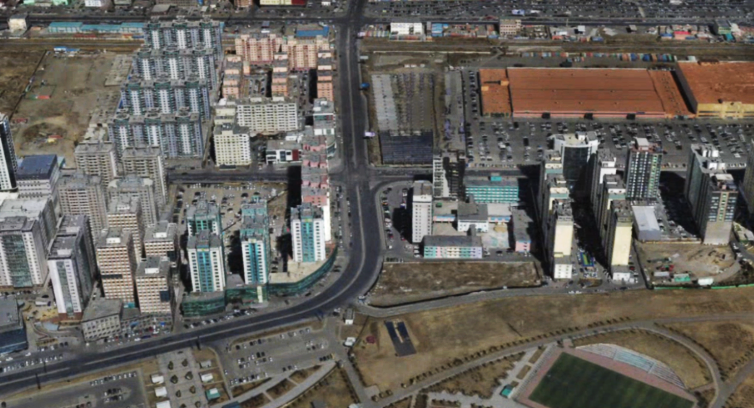
Users report up to 42% improved decision-making.
By using forward-looking simulation, Skyral improves not only the steady state, but delivers the detail and complexity needed so that smart transit systems can adapt and adjust to daily challenges.