10.12.2025
Naomi Hulme


Lee Doherty
Growth Director
Patton’s words still ring true today. The challenge for modern commanders isn’t a lack of courage or intent. It’s the ability to make the right decision, fast, in an environment where data overwhelms instinct. The modern battlespace is defined by speed, complexity, and uncertainty. Success depends on who can process, interpret, and act on information first.
From the earliest days of reconnaissance balloons and radioed reports to the Blitzkrieg’s revolutionary coordination of land and air forces, warfare has always been a race against time and information. Today, that race has accelerated beyond recognition. Drones, uncrewed vehicles, AI-driven sensors, and multi-domain operations have turned the battlespace into a constantly shifting, “faster-than-real-time” ecosystem. Commanders need clarity. They don’t just need data. And that’s exactly where digital mission planning tools, overlaid with AI-driven modelling & simulation software, are rewriting the rules.
Since the early concept of the Joint Operational Picture, the goal has been simple: bring together intelligence, logistics, operations, and communications into one coherent view. The problem? The data deluge has grown so fast it can drown even the most capable command team.
Modern digital tools—especially AI, modelling and simulation (M&S), and digital twins—now make sense of the complexity this age of warfare brings. They enable commanders to fuse information across all domains and instantly visualise the impact of decisions before they’re made. This is no longer about static maps and delayed reports; it’s about living, adaptive digital environments where visualisation is key to seeing warfighting evolution in real time.
Digital mission planning transforms the traditional planning cycle into a dynamic, data-driven process. AI-powered analytics, real-time intelligence feeds, and predictive modelling combine to generate faster-than-real-time insights. Multiple Courses of Action (CoAs) can be created, stress-tested, and refined within minutes.
Imagine being able to see the effects of a plan across land, sea, air, space, and cyber before a single unit deploys. That’s the promise—and reality—of today’s mission planning technology. The future battlespace demands it. Forces must synchronise hundreds of systems, partners, and decision layers while remaining agile enough to adapt on the move.
At Skyral, we’re seeing this revolution play out every day. Our software platform is designed not just to support operational decision-making but to accelerate it, fusing fragmented information, visualising complex scenarios, and empowering commanders and battlestaff to act decisively under pressure.
CORE integrates data from diverse sources into a modular environment where planners can visualise options, compare CoAs, and immediately adapt plans as the operational picture evolves. It supports rapid, “safe-to-fail” experimentation, which means teams can collaborate, simulate complex strategies, and predict outcomes without real-world consequences.
Through advanced visualisation tools, CORE provides intuitive, map-based representations of complex, multi-domain scenarios. Decision-makers can instantly assess first-, second-, and third-order effects, building confidence in every plan and every choice.
Digital twins (DTs) are revolutionising defence by providing real-time, high-fidelity replicas of assets, systems, and environments. Within Skyral’s ecosystem of technologies, DTs enable commanders to test and refine decisions against evolving conditions. Not only does this dramatically enhance situational awareness, it also supports knowledge capture and improves decision tempo. It’s what ensures military advantage is maintained.
A well-designed digital twin can simulate mission outcomes across multiple domains, replay scenarios, and optimise plans based on AI-derived insights. In practice, this means military planners can run through hundreds of operational permutations in minutes—and all before committing resources or personnel.
Skyral’s Mission Planning and Decision Support (MPDS) toolset, developed from operational deployments with NATO and UK forces, closes the loop between planning, execution, and learning. Accredited at Secret level, MPDS gives commanders a unified operational picture that adapts as missions evolve. Plans can be updated in real time, automatically exported to digital training environments, and revalidated as new intelligence arrives.
This is the essence of digital transformation in defence: continuous learning, instant adaptation, and decision superiority.
The integration of digital mission planning, AI-driven decision support, modelling & simulation, and digital twins isn’t just an upgrade. It’s a paradigm shift. It allows armed forces to plan and fight smarter, faster, and more cohesively across every domain.
At Skyral, we’re proud to be helping defence customers turn this vision into operational reality. Through sustained investment, international collaboration, and a relentless focus on interoperability, we’re enabling the digital backbone of modern mission planning.
The future of defence operations will belong to those who can outthink, not just outfight, their adversaries. With modelling, simulation, and digital twins at the core, that future is already here. And I’m proud it’s being built by Skyral.
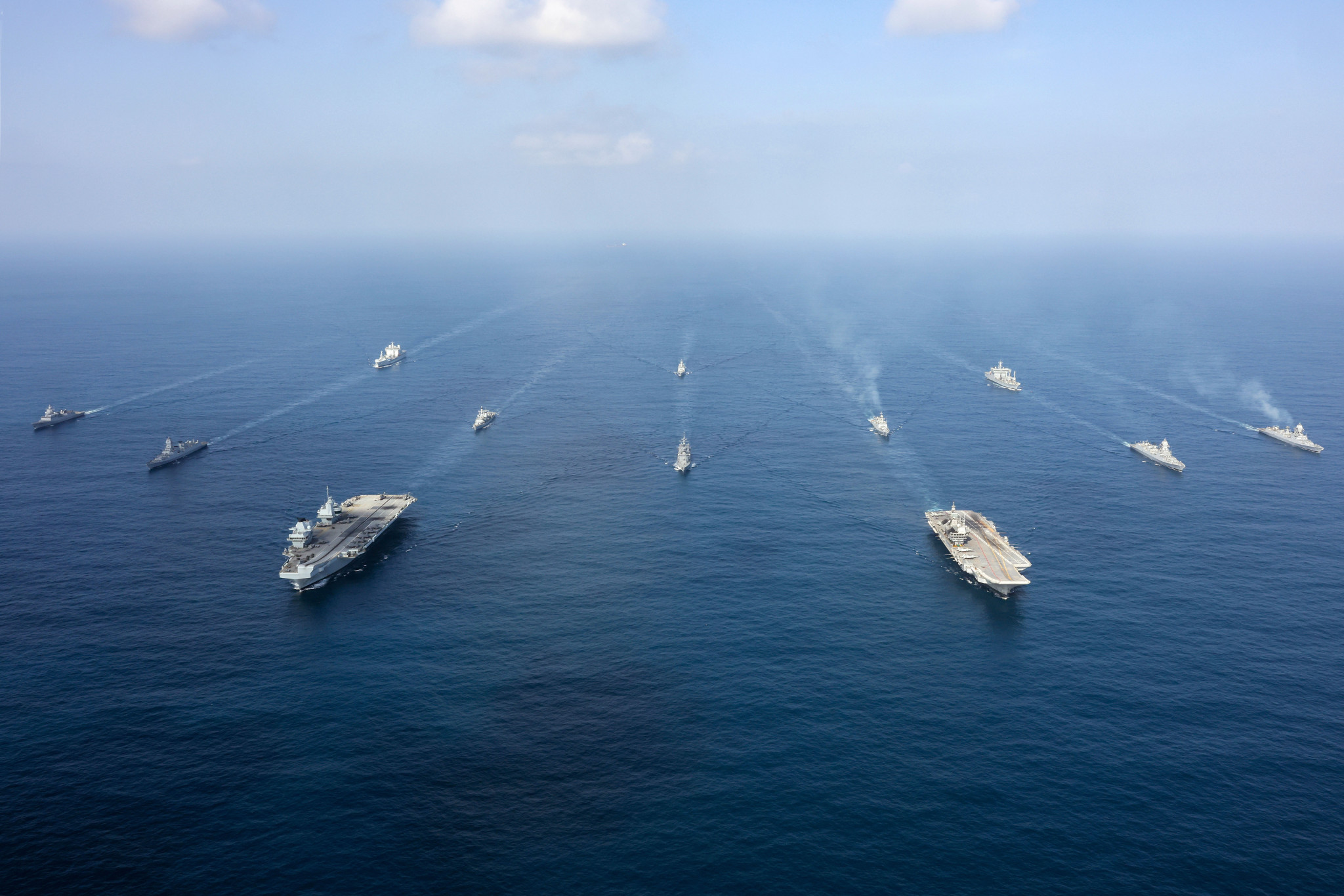
*Header photo is used under the OGL, MOD Crown Copyright 2025
Naomi Hulme
Lee Doherty
Naomi Hulme